The Houthis may soon discover the limits of Saudi strategic patience
The Houthi declaration that they intend to block Saudi shipping and vessels bound for Saudi ports in the Red Sea is not another act of revolutionary theatre. It is Iran’s latest attempt to test Saudi Arabia’s strategic patience through one of its most capable regional proxies. That is a dangerous gamble because Riyadh has spent nearly a decade avoiding the wider regional war that Tehran increasingly appears determined to provoke.
Saudi restraint has never reflected military weakness. It has been a deliberate strategic choice intended to preserve regional stability while enabling the kingdom to focus on its historic economic transformation. Unable to compete with Saudi Arabia’s regional trajectory through conventional means, Iran has increasingly turned to proxy warfare, maritime coercion, and economic intimidation.
The Houthis have become the principal instrument of that strategy. By threatening shipping in both the Strait of Hormuz and Bab al-Mandeb, Tehran seeks to pressure Saudi Arabia from its eastern and western maritime gateways while raising the cost of regional stability. The objective is not military victory but economic disruption: undermining investor confidence, threatening energy exports, and projecting instability onto the Middle East’s largest economy.
That strategy carries consequences far beyond the region. Saudi Arabia remains the world’s largest crude oil exporter, OPEC’s leading producer, and the only country with sufficient spare production capacity to stabilize global energy markets during periods of crisis – as it did during the first phase of the Iran war through its 7 million barrels per day East West Pipeline. Sustained disruption of Saudi exports would ripple through international shipping, insurance markets, inflation, and the global economy.
Iran tried to prepare for the present escalation by attempting to restore the Tehran-Sana’a air bridge. The flights were never simply about reconnecting two capitals. They would have provided a direct logistical corridor through which operational planning advisers, missile specialists, drone technicians, and intelligence officers could rotate into Houthi-controlled territory. Such an air corridor would have allowed Tehran to transfer not only equipment but also operational expertise and command capability.
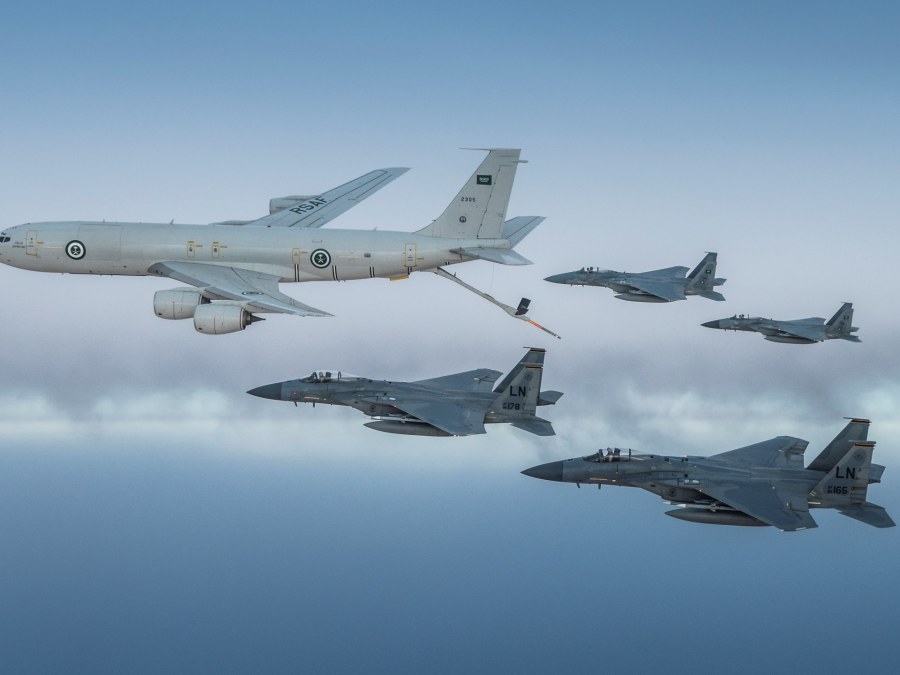
This explains why the Royal Saudi Air Force (RSAF) strike on Sana’a International Airport carried significance beyond denying a specific aircraft permission to land.