Yemen’s health workers race to halt latest outbreak of deadly dengue fever
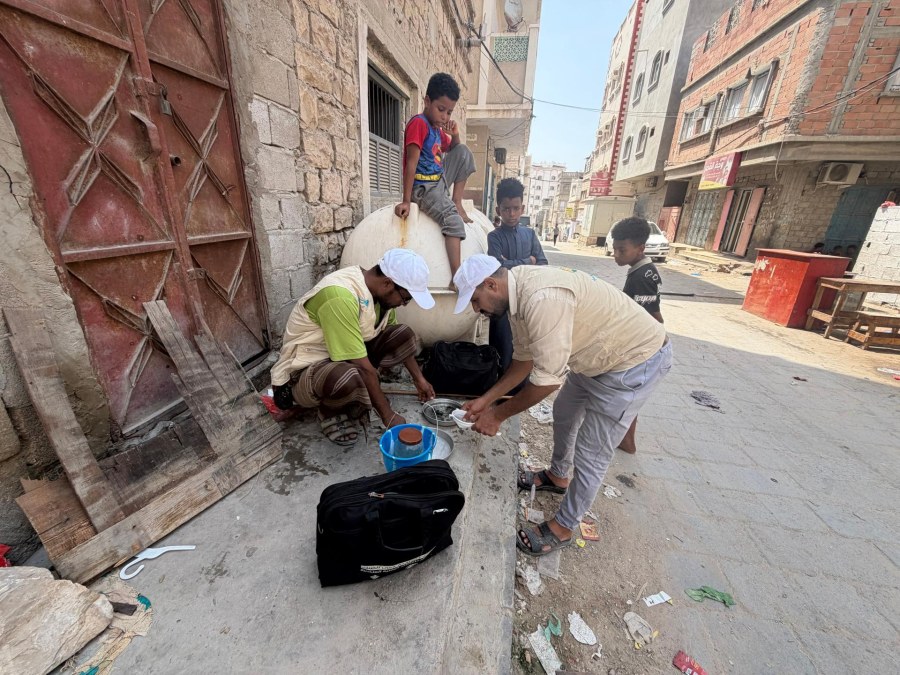
Yemen’s health workers race to halt the latest outbreak of deadly dengue fever. Every time they spot a pool of stagnant water, they stop and inspect the puddle. Armed with dippers and sample containers, they are on the hunt for mosquito breeding grounds amid an outbreak of the deadly dengue fever. Makalla has become one of Yemen’s worst-hit areas for dengue fever, a viral infection spread by mosquito bites that can cause fevers, headaches, body aches, nausea, and in severe cases, death.
Bin Shabz kneels beside an open drainage chamber where a puddle of stagnant water, discharged from a household air conditioner, has turned green after standing for weeks. He dips a ladle into the water and pours the contents into a shallow metal tray. Within seconds, tiny larvae begin wriggling across the surface. “These are mosquito larvae,” bin Shabz, an insect surveillance officer at the provincial office of the National Malaria Control Programme (NMCP), said.
“This type is Anopheles, which transmits malaria, while the other is Aedes, the mosquito that spreads dengue fever. We collect the larvae, place them in containers and identify them before taking the necessary control measures.” The discovery confirms the team’s fears: Al-Koud has once again become a breeding ground for both dengue and malaria mosquitoes, despite repeated campaigns to control the spread of the insects.
“We carried out mosquito control campaigns in this area two months ago, combining public awareness, insecticide spraying, and efforts to eliminate breeding sites,” bin Shabz says. “Now we’ve returned and found many of the same breeding sites still exist.” After draining the chamber, the team presses deeper into the neighbourhood. Minutes later, they stop outside another house where an uncovered water storage tank sits beside the entrance. Bin Shabz lowers a long-handled dipper into the tank and transfers another sample into a metal tray.
“The tank is infested with both malaria and dengue larvae,” bin Shabz confirms. He asks a group of curious children to fetch the homeowner so he can explain the dangers.