Yemeni women support families through enterprise as economic crisis bites
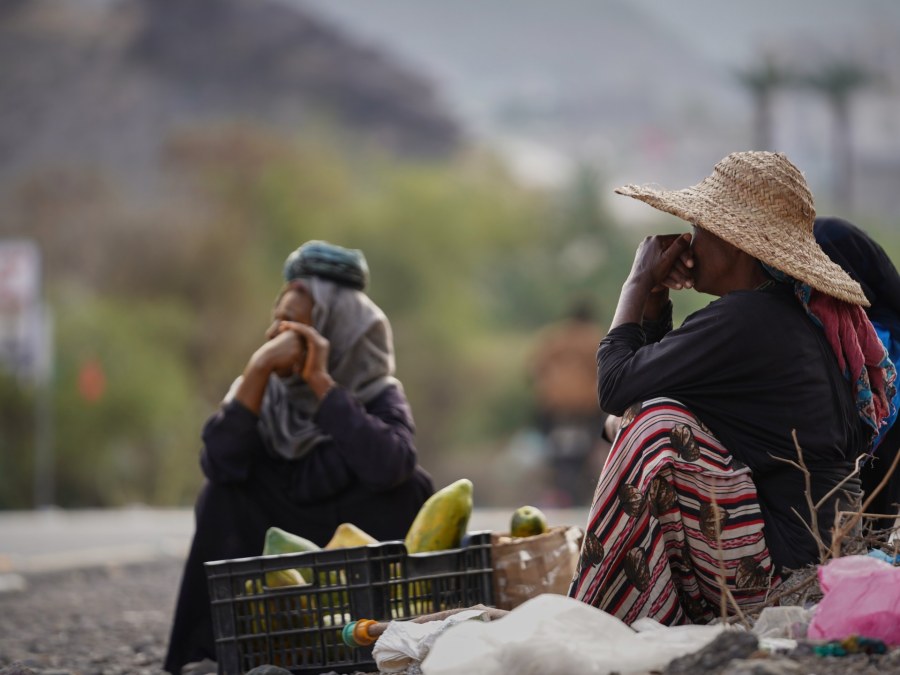
Yemeni women support families through enterprise as economic crisis bites
They are united by a shared goal: securing a stable livelihood for their family and bringing a relatively new cuisine to the Yemeni city. The husband-wife team serves up burgers, fries, pizzas, and fried chicken, a common sight in cities across the world but less so in Taiz, which has been under siege and bombardment during Yemen’s civil war.
In Yemen, traditional roles still dictate that the father works while the mother manages the home and prioritises that before embarking on a second job. Life for 36-year-old Baleegh Al-Doba’ai and his wife, Aziza, is also different. Every morning, they wake at 6am and eat breakfast with their only child, before heading out to Abu Sultan, a fast-food restaurant, for a day of work. Baleegh serves as the head chef, while Aziza manages the restaurant’s daily operations. It is this partnership that Baleegh credits as the secret of Abu Sultan’s success, with around 30 customers a day and many food deliveries to the city’s student population.
“Working with a life partner who shares your ambition melts away the difficulties,” Baleegh told Al Jazeera. “She has an infallible eye for administrative and operational details, allowing us to cover all aspects of the business with high efficiency.”
Previously, Baleegh worked in Saudi Arabia. But wanting to be with his family in Yemen, he always knew his stay there was temporary. When he returned home, he came with the idea of starting a fast-food business, a fairly novel concept in Yemen.
“I got the idea while in Saudi Arabia and even brought some of the machinery back with me, but funding the entire project and managing it alone was incredibly difficult,” he recalled. “It was my wife who stepped in, helping to fund the restaurant and taking charge of the management.” Baleegh’s doubts about the viability of the business nearly drove him back to Saudi Arabia, but Aziza urged him to continue, handling the financial and managerial responsibilities to make it happen.