Where does Iran stand on Saudi-Pakistan-Turkiye pact?
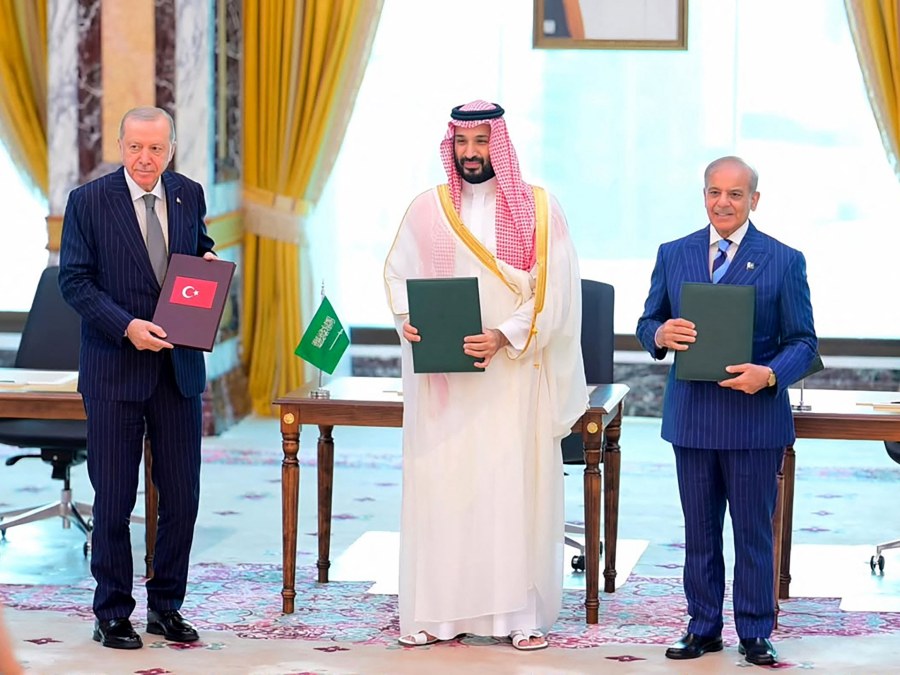
Under the agreement signed in Mecca on Friday, any external armed attack on either of the three countries will now be considered an attack on all. The trilateral pact was announced more than five months after the US and Israel launched a bombing campaign against Iran, triggering a conflict that quickly spread to the Gulf and disrupted maritime traffic through the Strait of Hormuz. Pakistan, Saudi Arabia and Turkiye, however, have been careful not to antagonise any regional or international actors while finalising what they said was the result of years of hard work and negotiations. They have stressed the pact, which does not identify a specific threat, is not targeted against any country – particularly Iran – and does not abrogate or replace any existing agreements with others.
In Tehran, the reaction has largely been subdued, with officials mostly focusing on aspects of regional and Muslim cooperation and what they perceive as a declining role for the US. Iran’s Foreign Minister Abbas Araghchi said on Friday that when Muslims stand together, “we can face every challenge by malicious outsiders head-on”. “Time to rely only on ourselves and embrace true brotherhood,” he wrote without directly mentioning the trilateral agreement signed hours earlier.
But Iran certainly sees some reasons to be concerned in the long run, according to Hamidreza Azizi, a researcher and analyst on Iran and Middle Eastern geopolitical dynamics. The associate at Clingendael Institute told Al Jazeera that the timing is important, since the agreement comes after months of a war in which Saudi Arabia has faced attacks from the Iran-aligned Houthis in Yemen and armed groups in neighbouring Iraq.
“From Tehran’s perspective, the concern is therefore not only that the pact could strengthen Saudi deterrence, but that it could eventually facilitate coordinated pressure on Iran in Yemen, Iraq, and even economically through Turkiye and Pakistan,” he said. On Sunday, the Houthis claimed another successful drone strike on the Saudi Aramco refinery in Jizan. Saudi Arabia confirmed a fire was extinguished without inflicting casualties but did not mention the cause. Separately in Yemen, Houthi missiles and drones struck the Saudi-backed and internationally recognised government’s Red Sea port of al-Makha.