What will happen to Trump’s agenda after Lindsey Graham’s death?
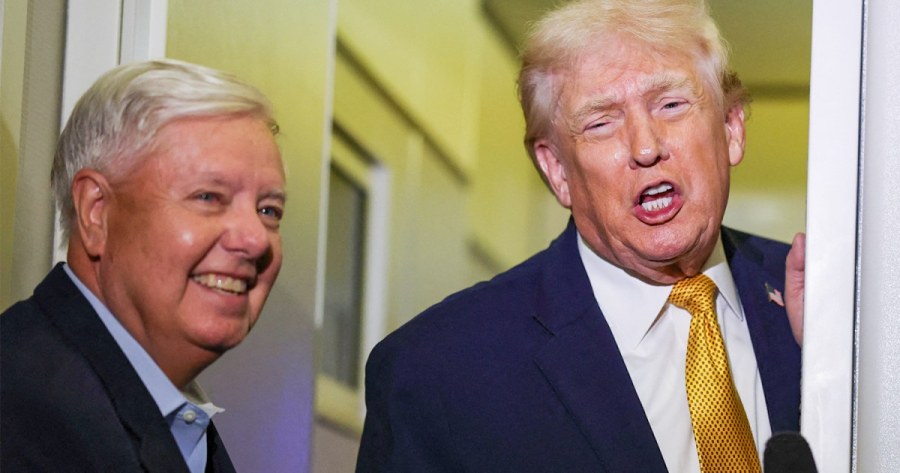
The 71-year-old Republican Party politician was a close ally of President Donald Trump in the Senate, both on domestic and international matters, including the ongoing US-Israel war on Iran.
On Saturday evening, shortly after returning from a business trip to the Ukrainian capital, Kyiv, emergency services were called to Graham’s residence, according to US media reports. Graham’s office initially said he died of a “sudden and brief” illness. It later shared that the preliminary medical examiner found that he had died after a tear in his aorta. The aorta is the main and largest artery in the human body, and a dissection in it is life-threatening.
Graham was scheduled to appear on an NBC news talk show on Sunday morning. Trump instead joined the programme and hailed his late ally as a “natural-born, hard-working politician skilled at dealing with people” from both major US parties. “He’s a tough one to lose. He was great. He was unique in every way, actually,” Trump said by telephone.
He said they had spoken on Saturday evening as Graham returned from Ukraine, and they made tentative plans to meet on Sunday. “It could have been his last call,” Trump said. He added that he could not believe that Graham was dead. “He was like a member of the family to me.”
Graham’s death has narrowed the Republican Party’s majority in the Senate, now reduced to 51 in the 100-member chamber, after Senator Mitch McConnell on Sunday said a fall had led to his hospitalisation and he would not return to the Senate “quite yet.” Graham’s passing and McConnell’s absence will temporarily whittle down the Republican majority in the chamber by two, compared with 47 in the Democratic caucus. The reduced majority may create difficulties for the Republicans as they try to increase the budget for military funding and confirm Trump’s nominees ahead of the midterm elections.