‘The crisis is deep’: The view from Russia as fuel shortages worsen
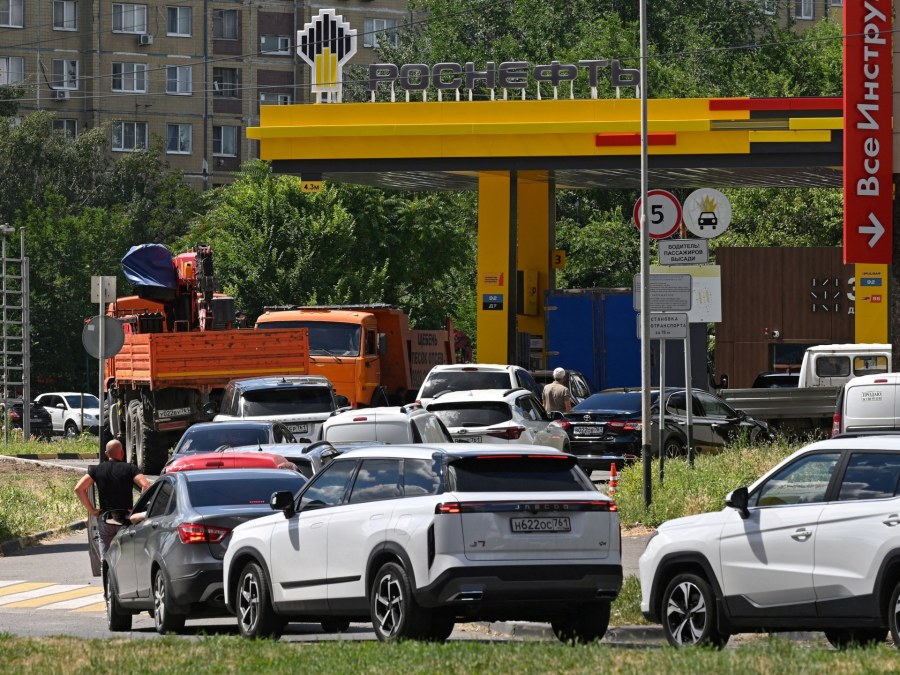
With continuing war in Ukraine and agricultural harvesting underway, the government is scrambling to re-route supplies, maintain price caps, and enforce export bans to prevent further domestic shortages. Long lines at petrol stations are now a common sight throughout the country, including in the prosperous capital, Moscow. People wait for hours to fill up their cars. In some places, the pumps are completely dry. There is a sense of patience but also mounting anxiety in the air.
“I’m deeply frightened by the uncertainty and the lack of understanding where the situation is heading,” a woman named Irina, waiting to fill up her car in Moscow, told Al Jazeera. Igor, another Moscow resident, said: “I think things can get out of control if the crisis causes major industries to shut down.” Both interviewees requested to withhold their surnames.
Analysts predict that increased fuel prices will mean higher transportation costs followed by significant price hikes for goods and services. Stanislav Mitrakhovich, an expert at the National Energy Security Fund at the Russian Financial University, said the crisis is “deep, yet for a long time, Russian authorities were unwilling to acknowledge it.” He added that the Russian response has led to “greater public distrust” of authorities and, consequently, triggered panic buying.
“Indirect evidence indicates that Ukrainian drone attacks have disabled about a quarter of Russia’s oil refining capacity,” he told Al Jazeera. “Seasonal demand has also contributed to the problem. The crisis has led to rising fuel prices and local shortages, as some regions simply lack oil refineries.” The situation is “even worse” in regions close to the combat zone, he said. “Measures to restrict and ration fuel sales have long been in place there.” To tackle the problem, Russia has imposed fuel rationing. Sales are often limited to about 20-30 liters (about 5-8 US gallons) per vehicle, and drivers must pump fuel strictly into vehicle tanks.