Who is Khalil al-Hayya, Hamas’s newly elected political chief?
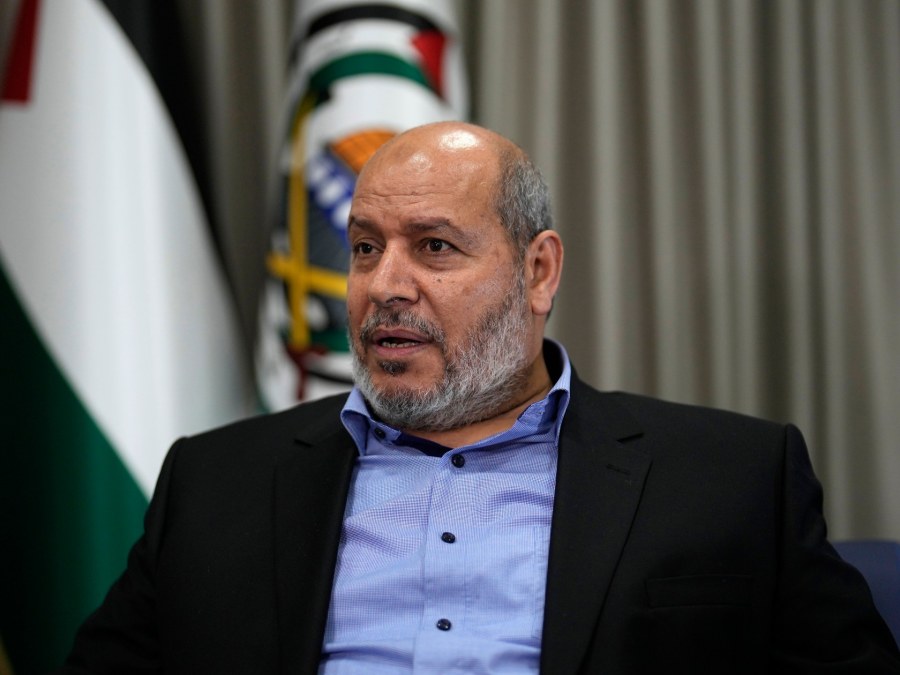
Al-Hayya’s election on Monday follows the killing of the previous leader, Yahya Sinwar, by the Israeli army in the Gaza Strip in 2024. Sinwar had taken over after the Israeli assassination of political head Ismail Haniyeh earlier that year. Al-Hayya himself survived an Israeli assassination attempt in Qatar last year. His appointment came after a run-off vote within the movement’s General Shura Council against former political chief Khaled Meshaal, after neither candidate secured the required 50 percent plus one majority in earlier voting. The election of al-Hayya, formerly the group’s exiled Gaza leader, is in line with Hamas’s internal 2021 framework requiring top leadership positions to reflect its key geographical sectors – the other two being the occupied West Bank and the diaspora. Al-Hayya, who was part of a temporary five-man ruling council established in late 2024 to handle wartime governance, will now serve out the remainder of the current electoral term ending in 2027.
Academic roots and early activism
Born in Gaza City on November 5, 1960, al-Hayya grew up in a conservative family deeply scarred by the 1967 Arab-Israeli war and the subsequent Israeli occupation. Witnessing military raids on his Gaza family home and the arrest of relatives during his childhood shaped his early political consciousness. In March 1980, a pivotal meeting with Hamas founder Sheikh Ahmed Yassin drew him into organised activism. Al-Hayya pursued extensive Islamic studies, obtaining a bachelor’s degree from the Islamic University of Gaza in 1983, a master’s degree from the University of Jordan in 1986, and a doctorate in hadith sciences from Sudan in 1997. He later served as the dean of student affairs at the Islamic University of Gaza and joined the Palestinian Scholars Association. A founding member of Hamas in 1987, al-Hayya was repeatedly imprisoned by Israeli forces during a Palestinian uprising known as the first Intifada in the late 1980s, enduring severe torture during his detentions. In 2006, he entered politics formally, winning a seat in the Palestinian Legislative Council and leading the Hamas parliamentary bloc.
Chief negotiator and diplomat
Over the past two decades, al-Hayya held critical organisational roles, including deputy leader of Hamas in Gaza and head of its Arab and Islamic relations office. He played a crucial role in the movement’s diplomatic affairs, heading delegations during ceasefire negotiations following conflicts.