Why have India’s Gen Z protesters called for a march to parliament?
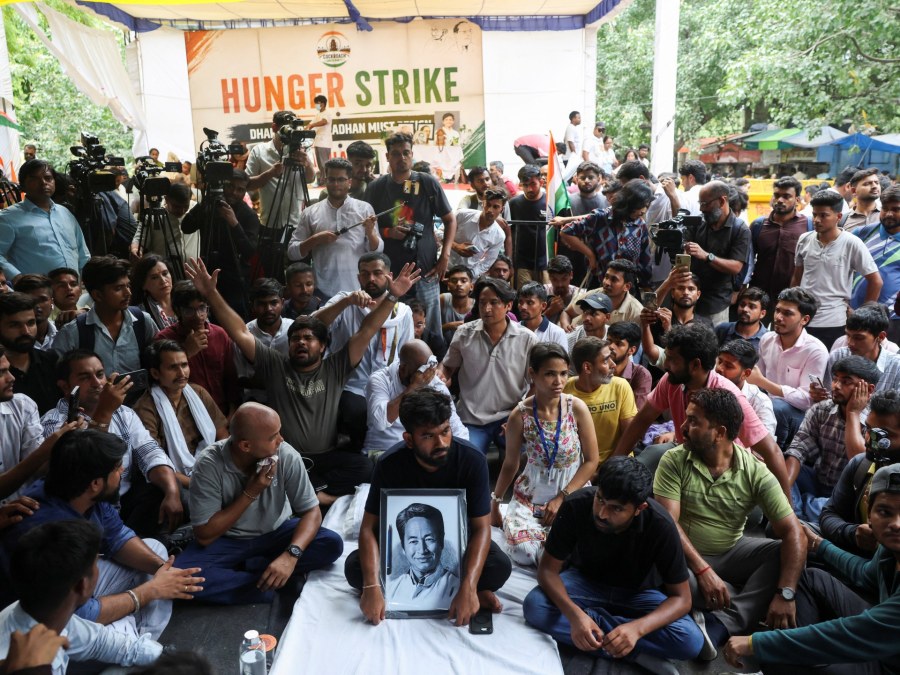
For nearly a month, supporters of the viral “cockroach” movement have occupied New Delhi’s Jantar Mantar area, India’s most popular protest site, located a couple of kilometres from parliament, after back-to-back scandals related to examination paper leaks, technical glitches, and cancelled tests triggered outrage in the world’s most populous country.
On Saturday, dozens of police officers forcibly removed activist Sonam Wangchuk from the protest site, 20 days after the 59-year-old Gandhian began a hunger strike in solidarity with the cockroach movement. Police cited a court order and Wangchuk’s “deteriorating health condition” to defend their move. But Wangchuk’s wife, Gitanjali J Angmo, said her husband was taken to hospital against his will and accused the government of “illegal detention” disguised as medical care.
Angered over Wangchuk’s removal, Abhijeet Dipke, the founder of the Cockroach Janta Party (CJP), has now demanded Modi’s resignation and urged his supporters to march to parliament on Monday, the first day of its monsoon session.
As thousands have responded to Dipke’s call, New Delhi is on edge amid a heavy deployment of police and paramilitary forces. Other activist groups and political parties have expressed their solidarity with the march and asked people to join.
What is the cockroach movement? It is made up primarily of young Indians who identify themselves as “cockroaches”, casting themselves as survivors of what they see as a system stacked against them.