Palestinians in occupied West Bank hold firm on Indigenous Peoples’ Day
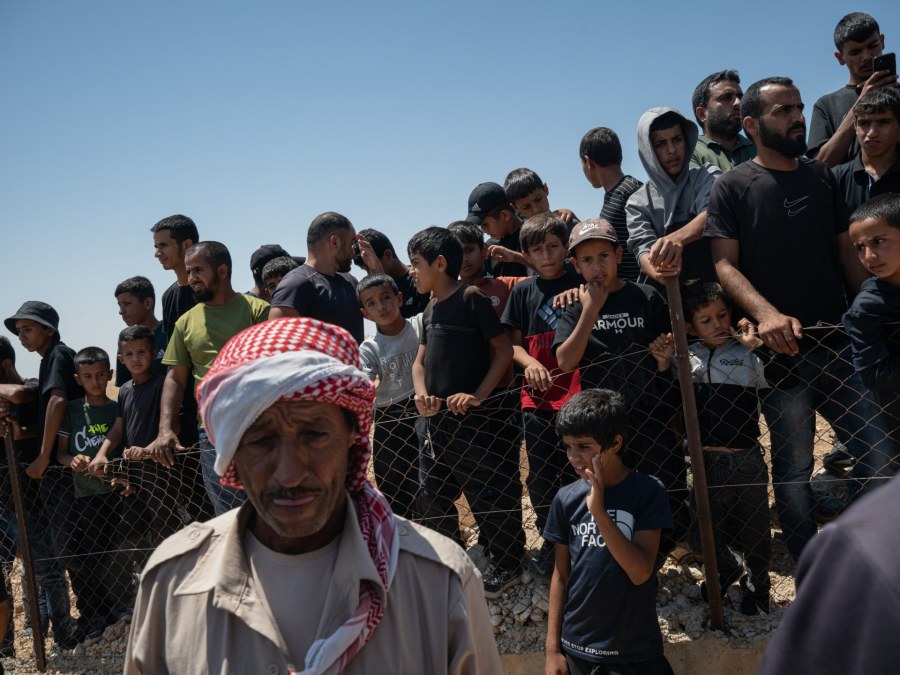
The small Bedouin village, located in Masafer Yatta, was marrying off two of its sons. Cauldrons of slow-cooked lamb meat for mansaf – a large platter of traditional Arabic food – fed the whole community. But there was no dahiyya, the line dance and chant that normally opens a Bedouin wedding. Residents said it did not feel right coming so soon after the first anniversary of the killing of Umm al-Khair activist and community leader Awdah Hathaleen, allegedly by Israeli settler Yinon Levi. The community continues to endure daily settler attacks, arrests and incursions by Israeli soldiers, and the threat of further demolitions by Israeli authorities looms.
During celebrations, families spread out in different areas rather than gathering in one place, wary of drawing any attention that, in the past, has brought soldiers to disrupt the celebrations. “There is a wedding, but they are not letting us celebrate quietly,” said Tariq Hathaleen, an English teacher and community leader in Umm al-Khair.
On Thursday, the first day of the wedding, Shimon Atiya – the Israeli settler behind the illegal outpost of Havat Shorashim, established roughly 800 metres from the village in 2022, and who has been under a restraining order since July 2025 for harassing Umm al-Khair families — crashed the wedding in the only style he knows. He brought his livestock to graze in a resident’s vegetable garden, escorted by Israeli soldiers who stood by as it happened. When villagers told the soldiers that the plot is recognised as Umm al-Khair land, they were told the maps had changed; when they asked to see the new maps, they were refused. That night, the outpost’s fence towards the village homes was torn down – a prelude to pushing the boundary further in, residents believe.
Hathaleen says the settlers’ timing was a reaction to Levi’s indictment days earlier — one of the few times an Israeli has been charged with the killing of a