Can AI systems make moral decisions in war?
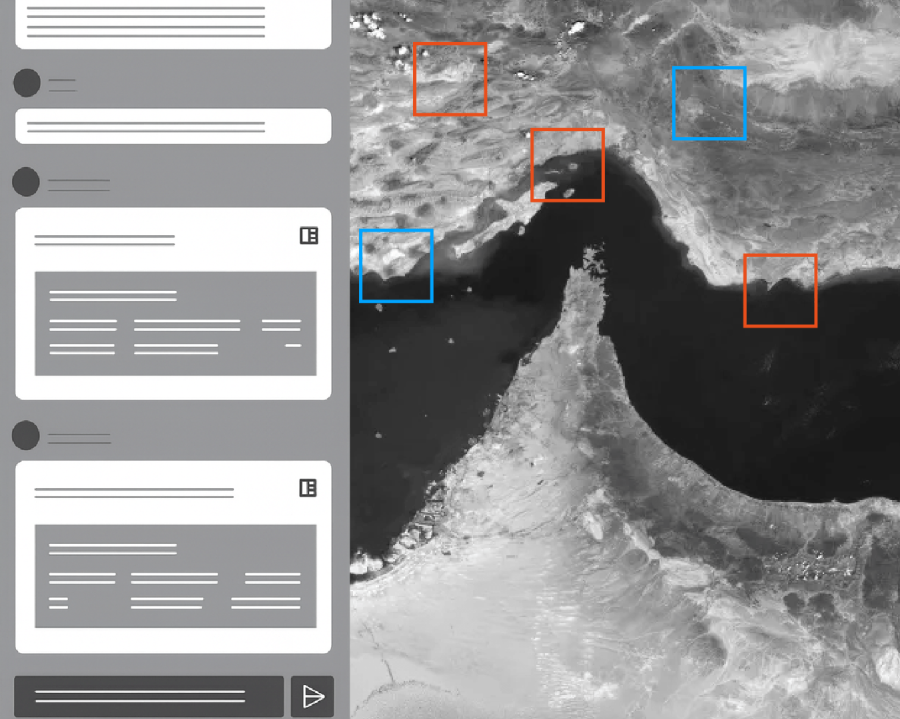
From autonomous drones to AI-powered command-and-control, machines are paving the way for fewer decision-makers in the war room and boots on the ground. That transformation is already reshaping conflicts by introducing new technologies in Kyiv, Gaza, and Tehran.
AI-powered interceptor drones in Ukraine. Israel’s AI-enabled target generation used in Gaza. And, most recently, Palantir’s Maven Smart System (MSS) used to identify and strike thousands of targets during the US-Israel war on Iran. On February 28, the first day of the US-Israel war on Iran, Maven helped to strike more than 1,000 targets, among them an Iranian primary school in Minab where more than 150 people were killed, most of them children. Four months later, the Pentagon’s investigation of the attack remains stalled, with senators demanding answers and Bloomberg reporting that the error traced back to outdated satellite intelligence.
As AI becomes firmly embedded in militaries, the question isn’t just whether these systems can be trusted to make accurate decisions, but whether they can grapple with the moral consequences of the decisions they make. As part of a series on AI and warfare, Al Jazeera examines if it can successfully replace human decision-makers.
Global military expenditure rose 2.9 percent last year to $2.87 trillion. Within that figure, spending on AI for military applications is accelerating fast, projected to grow from $11.7bn to nearly $19.3bn by 2030, according to industry reports. In April, the administration of US President Donald Trump proposed $1.5 trillion in defence spending for the fiscal year beginning in October to build a “dream military” and accelerate the shift from a traditional military-industrial complex to a military-tech one.
The US Pentagon has set its sights on becoming an “AI-first fighting force,” compressing the OODA loop – a decision-making model developed by US Air Force Colonel John Boyd in the late 20th century, built on the premise that whoever moves faster through decisions comes out on top. Fed continuously with new information, the OODA loop – observe, orient, decide, act – lets commanders decide actions at the latest possible moment, trading certainty for speed and adaptability.
Driving the push for speed is Project Maven, Palantir’s flagship AI intelligence platform, paired with Anthropic’s Claude, built to offer a real-time picture of the battlefield. The OODA loop’s logic was already at work in the drone wars of the 2000s and 2010s, when algorithmic pattern recognition flagged individuals whose behaviour matched a suspicious profile.