Gaza’s children still struggling with hunger as another famine threatens
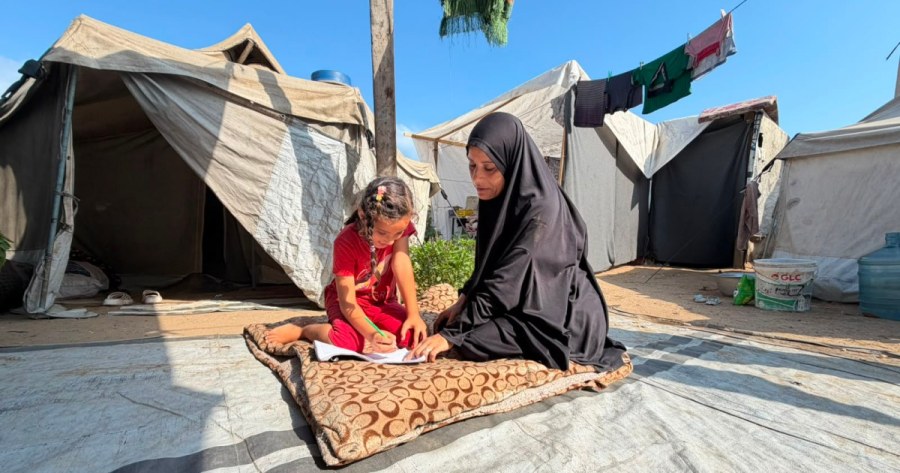
She watches them eat but is already worried about finding their next meal. The 35-year-old is the sole breadwinner for six-year-old Omar, four-year-old Sama, and Mahmoud aged three since her husband was killed in Israeli shelling of northern Gaza three years ago. Like many families in Gaza, they are struggling with soaring food prices, largely due to Israel’s long-running siege, with concerns that the population could be plunged into famine again.
During last year’s famine, the whole family – Omar and Sama in particular – suffered from a lack of food and vital nutrients. Eggs and vegetables were difficult to find in markets, and when available, almost impossible to afford. Even though the family can eat more regularly today, they still only have one meal a day. Omar and Sama’s bodies are still counting the cost of the months of famine between August and December 2025.
“Omar and Sama became very weak during the famine and lost a lot of weight. Even after food became more available, it took them around six months to gradually regain their health and weight,” she told Al Jazeera. “My biggest fear is that my children will become weak again. I want to see them healthy, but the food they need isn’t easy for me to provide every day.”
Their plight comes as the United Nations Office for the Coordination of Humanitarian Affairs (OCHA) warned last week that Gaza faces a severe food emergency that could develop into another famine. Justin Brady, head of OCHA in Palestine, warned that 67 percent of Gaza’s population was suffering from food insecurity. More than 200,000 people – around 10 percent of Gaza’s population – were living in conditions that usually precede a formal famine declaration by the Integrated Food Security Phase Classification.
In the area where Sahar lives, community kitchens have become the main source of food for many families. The meals they serve – mostly rice and other basic ingredients, but very rarely meat – are enough to stave off starvation, but children still lack essential nutrients and protein that are essential for growth.