Iran's Supreme Leader Khamenei's Burial Amidst Tensions
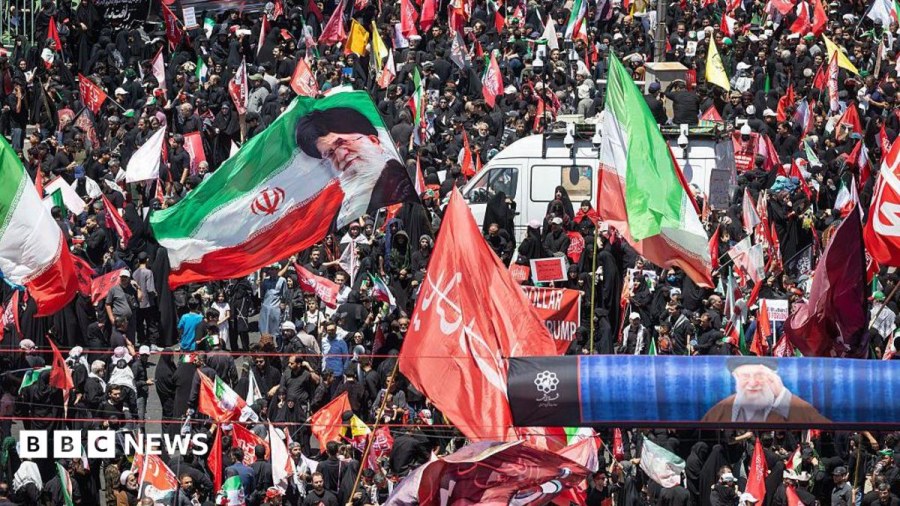
In the holy city of Mashhad, vast crowds bore witness to the interment of Iran's late supreme leader, Ayatollah Ali Khamenei, at the gold-domed Imam Reza shrine. This marked the conclusion of a nationwide period of mourning spanning both Iran and neighboring Iraq, following Khamenei's death on February 28. The ceremony unfolded under a tense geopolitical backdrop, with recent hostilities threatening to undermine preliminary peace talks between Iran and the United States.
Tensions escalated as Iran's Revolutionary Guards accused the United States of conducting aerial bombings on vital infrastructure en route to the burial site. This accusation follows the assassination of Khamenei and select family members, attributed to an Israeli military strike facilitated by U.S. coordination, further straining Tehran-Washington relations. Despite these tensions, Ayatollah Khamenei's son, Mojtaba, who is currently absent from public appearances due to injuries sustained in the strike, was notably absent from the mourning processions.
The logistics of the funeral were expansive. A plane transported the coffins of Khamenei and his relatives from Iraq, where thousands of mourners had gathered at Shia shrines. In Mashhad, mourners, adorned in black and holding flags and banners, expressed deep-seated animosity towards U.S. President Donald Trump and Israeli Prime Minister Benjamin Netanyahu, whose coordinated attack catalyzed the current hostilities. The procession, culminating at the Imam Reza shrine, underscored the complex interplay of mourning, religious significance, and geopolitical friction.