Is the world experiencing more earthquakes now than before?
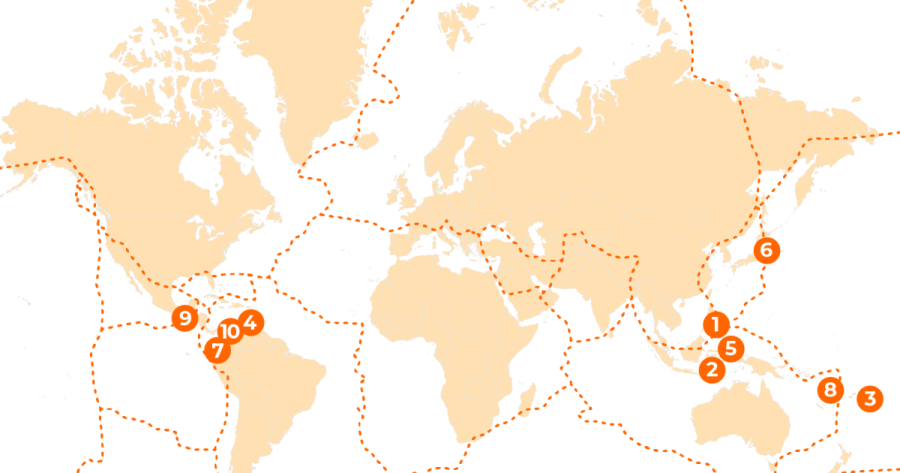
In June, two powerful quakes seconds apart leveled swaths of northern Venezuela. The run of disasters has prompted a question asked after every cluster of big earthquakes: Is the Earth shaking more than it used to? In this visual explainer, Al Jazeera examines a decade of earthquake data to see how 2026 compares and explains how and where earthquakes strike.
According to the United States Geological Survey (USGS), there are about 20,000 earthquakes recorded globally each year, roughly 55 a day. However, most of these are too weak to be noticed by people. It is when earthquakes reach magnitude 6 and above that large-scale damage tends to occur.
The Philippines recorded the strongest, a magnitude 7.8 off Mindanao in June that killed more than 100 people. Venezuela’s 7.2 and 7.5 quakes, also in June, killed more than 6,300 people. The most recent quakes, in Mexico in July and Colombia and Indonesia in August, were all magnitude 7.4 or higher.
From 2016 to 2025, the world recorded an average of 133 earthquakes of magnitude 6 or greater each year. They ranged from the lowest number of quakes at 99 in 2024 to the highest of 157 in 2021. By mid-August this year, 91 earthquakes of magnitude 6 or above had been recorded worldwide, including 11 above magnitude 7. Both those numbers are slightly ahead of the past decade’s pace but still within the normal range. None reached magnitude 8 or 9, the most destructive categories.
What makes an earthquake deadly has less to do with its magnitude than where it hits. Depth, proximity to cities, and the strength of local buildings matter more than the number on the Richter scale. The deadliest earthquakes of the past decade were not the largest ones. They were the ones that struck beneath population centers.
No. Long-term records show that earthquakes occur throughout the year with no consistent seasonal pattern. The US Geological Survey says scientists have never been able to predict when a major earthquake will strike because the tectonic stress that builds along fault lines over decades or centuries cannot be tied to a 12-month cycle.
Aftershocks can continue for months or even years after a major quake. Instead of predicting individual earthquakes, seismologists calculate the probability that a large quake will hit a given area over a span of years, work that underpins life-saving building codes.