Is Ukraine’s campaign of targeting Russian refineries working?
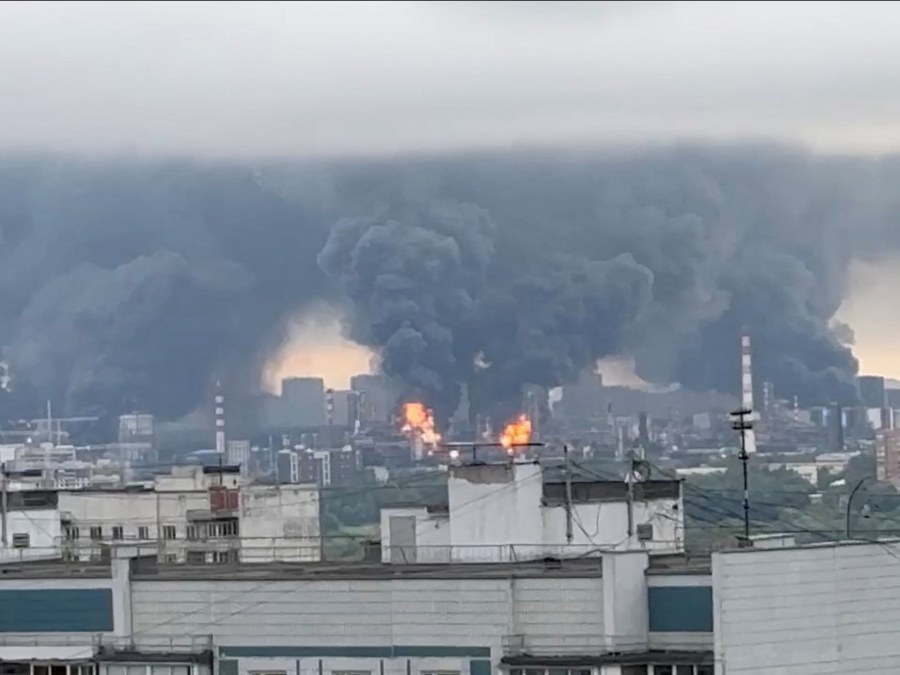
Long-range Ukrainian drone strikes on Russian oil refineries have resulted in serious fuel shortages across the country. They compelled Moscow, a major hydrocarbon producer, to begin purchasing fuel abroad. Ukraine has also disrupted Russian supply routes north of the Sea of Azov, causing acute fuel shortages and blackouts in the occupied Crimean peninsula.
The attacks have generated spectacular videos of refineries on fire and clickbait headlines claiming that “Russia is losing”. But what they have failed to achieve so far is changing Russian President Vladimir Putin’s calculus. After a long silence, Putin recently admitted that the strikes were indeed painful for Russia. But rather than moderating his conditions for a peace settlement, as Ukraine and its allies hoped he would, he staged a show of defiance and performative confidence.
In a statement issued on June 23, he made clear he has not stepped back from his demands. He wants the peace treaty to be based on the framework agreement Ukraine and Russia developed during the Istanbul talks in the spring of 2022, a few months into Russia’s all-out aggression. These included Ukraine’s neutrality and a cap on the size of its military, among other conditions.
But there are additional demands that have piled up over the four and a half years of war. This is what Putin refers to as “reality on the ground”, which stands for all the land Russia has occupied so far. Moscow wants to keep it.
And on top of that, he is adding another euphemism: “Anchorage modality”, a reference to the frameworks surrounding the inconclusive Alaska summit between Putin and US President Donald Trump in August 2025. What it stands for is the Russian demand presented at the summit – that Ukraine must withdraw from the parts of the Donbas region which it still controls.
Finally, Putin has ominously extended his territorial demands beyond Donbas to what he calls Novorossiya – a vague geographical term derived from the name of the province that existed in imperial Russia on the territory of today’s southern Ukraine. The vagueness is probably intentional: interpretations may range from the maximalist goal of capturing the port city of Odesa to a modest, but still painful one for Ukraine – demanding that Kyiv withdraw from the unoccupied part of Zaporizhia region, in addition to the Donbas.
Putin’s decision to double down on his demands likely rests on the fact that the situation in the country remains relatively stable. For all the dramatic visuals of burning refineries and queues at gasoline stations, most Russians have seen wors