Iraq faces crisis as Shia armed groups defy disarmament
Iraq faces crisis as Shia armed groups defy disarmament
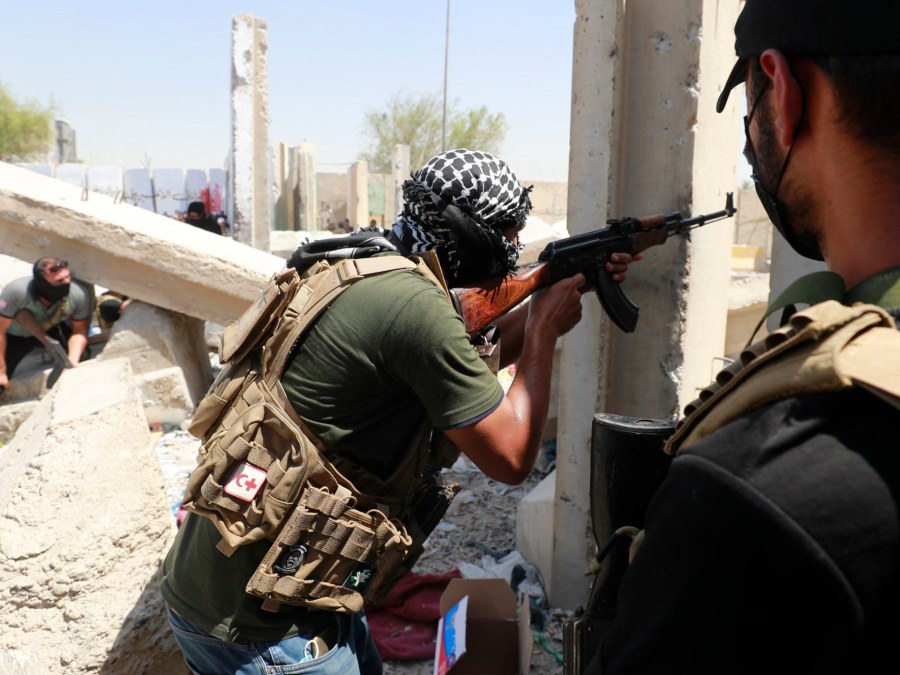
While a number of armed groups, such as Saraya al-Salam, Asaib Ahl al-Haq, and Kataib al-Imam Ali, have agreed to integrate into the state’s armed forces, the defiant stance of some powerful Shia paramilitaries threatens to derail the initiative. Kataib Hezbollah, an Iran-aligned Iraqi paramilitary group and one of the country’s most heavily armed factions, has explicitly rejected the government’s mandate, pledging instead to retain what it calls “resistance weapons” and further develop its arsenal. Similarly, the influential Harakat al-Nujaba has said the government’s push to confiscate arms should target illegal weapons causing chaos, not those held by fighters who “defended Iraq, its holy sites, and its people during the most difficult circumstances.”
The push for disarmament is heavily driven by pressure from the United States amid the war on Iran, as well as economic challenges associated with it and the need to attract foreign investment. Oil revenues make up more than 90 percent of Iraq’s state budget, but the closure of the Strait of Hormuz sent oil exports down to roughly 600,000 barrels per day (bpd) in March, from 3.3 million bpd.
Some observers say the refusal to disarm by groups holding immense sway brings the very concept of the Iraqi government into question. Speaking to Al Jazeera, Talib Mohammed Karim, a professor of political thought at Mustansiriya University, said maintaining armed factions outside state control undermines the constitutional order.
“When we talk about specific or defined factions … we will be facing a contradiction in confronting the state in its entirety and definition, meaning we need a new definition,” said Karim. He also cast serious doubt on the groups that have reportedly agreed to disarm. “Even when we talk about some factions handing over weapons, the reality is that the talk might be closer to hypothetical procedures or it might be for the media,” said Karim.
Some factions justify their retention of arms by pointing to the presence of US troops and external threats. However, political analyst Kadhim al-Hajj argued that linking disarmament to foreign troop movements was no longer a valid excuse, given the current geopolitical situation amid the war on Iran.