How the failed 2016 coup reshaped Turkiye’s civil-military relations
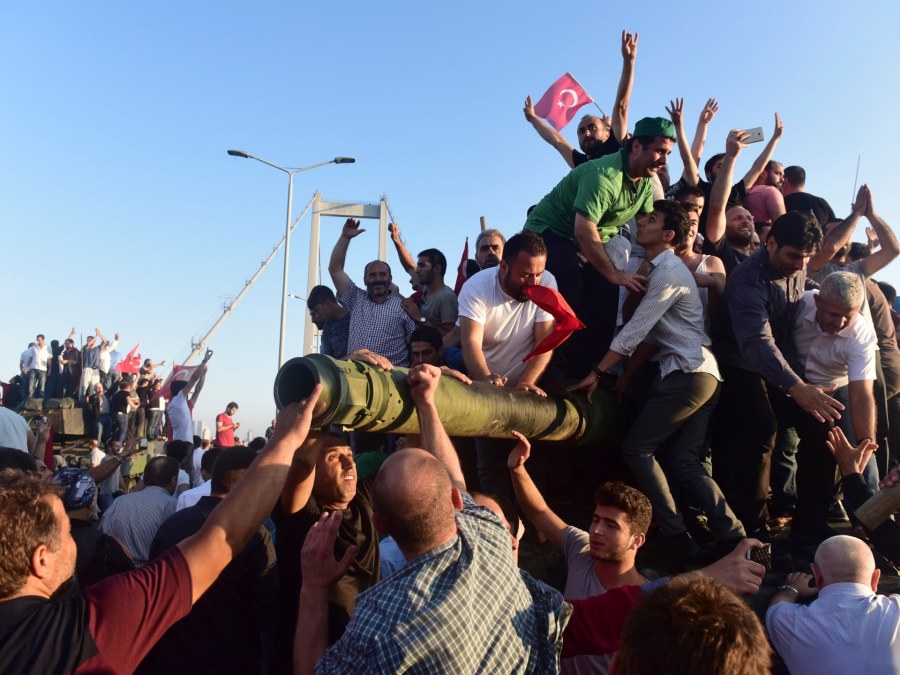
But within hours, the attempted takeover involving tanks and fighter jets had been quashed. Thousands of people poured onto the streets of major cities, joining loyalist members of the army and the police, and much of the chain of command, in defeating the putschists. The failed coup attempt 10 years ago was not only the bloodiest in Turkiye’s modern history – some 250 were killed and more than 2,200 wounded – but also a watershed moment that fundamentally changed relations between civil and military authorities in the country.
“The failure of July 15 had three pillars,” said retired Colonel Unal Atabay. “The resistance of the people, the officers, noncommissioned officers and soldiers inside the Turkish Armed Forces who resisted the coup, and the institutional reflex of the armed forces themselves.”
Military intervention cast a long shadow over Turkish politics for decades. The armed forces overthrew governments in 1960 and 1980; intervened through a memorandum in 1971; and forced another elected government from office in what became known as the “post-modern coup” of 1997. Although civilian rule returned after each intervention, the military remained one of Turkiye’s most influential institutions, seeing itself as the guardian of the republic’s founding principles.
Yet that was not how the republic’s founders had envisioned civil-military relations. Mustafa Kemal Ataturk and Ismet Inonu, both commanders during the War of Independence of the early 1920s, entered politics only after leaving military service. “If the military had remained involved in politics, it would most likely have been exploited by various groups in the uncertain and weak conditions of those early years of the republic. They made the most accurate diagnosis and said that the military should stay out of politics."
Political scientist Ali Carkoglu said separation between military command and civilian politics was regarded as one of the republic’s founding principles, calling it “the most accurate diagnosis”. Over time, however, the armed forces increasingly came to see themselves as guardians of the state, repeatedly invoking that role to justify intervention in politics.