How new Yemen tensions could complicate the global energy crisis
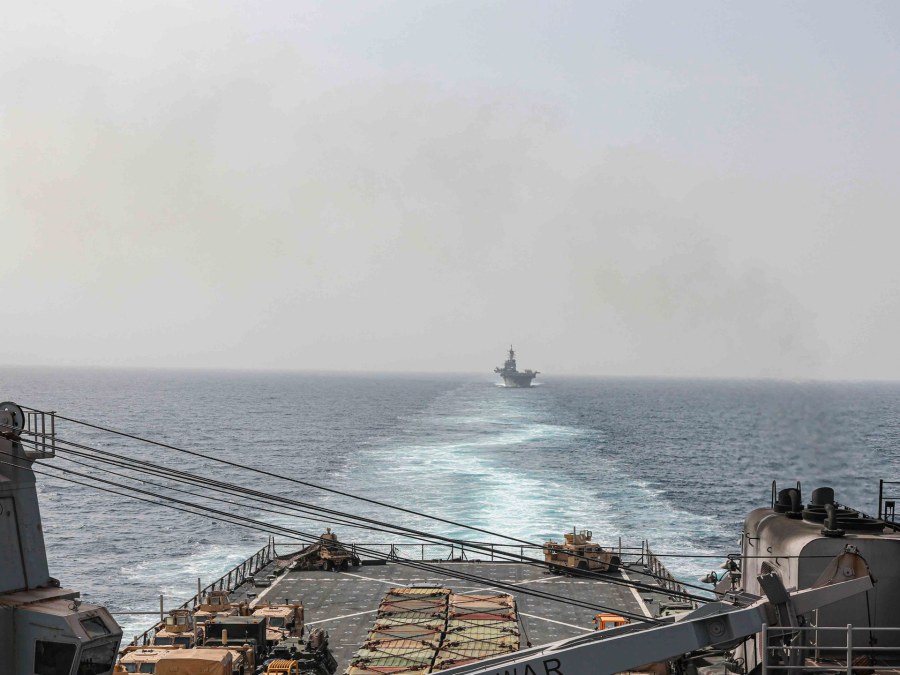
A sudden military escalation in Yemen has shattered a fragile, informal four-year truce, threatening to expand an ongoing geopolitical conflict into the Red Sea and sever one of the world’s most vital energy arteries. Following days of heightened rhetoric, Yemen’s internationally recognised government bombed the runway at Sanaa International Airport on Monday to prevent an Iranian aircraft from landing. In swift retaliation, Houthi rebels fired ballistic missiles towards southern Saudi Arabia, accusing Riyadh of being behind the attack on the airport — and declaring that the era of de-escalation with Yemen’s larger neighbour was officially over.
While the immediate violence centres on the airport dispute, analysts warn that the true danger lies in how this localised flare-up could spill over into the Bab al-Mandeb Strait, if it expands.
The trigger for the latest crisis highlights the deep regional fault lines running through Yemen. The Yemeni government, backed by a Saudi-led coalition, justified its strike on the airport by claiming the Iranian flight was carrying military experts, drone technology, and communication equipment. Houthi officials on the other hand have insisted the aircraft was transporting over 200 stranded medical patients alongside a delegation returning from the funeral of the late Iranian Supreme Leader Ayatollah Ali Khamenei in Tehran. The Houthis ultimately diverted the flight to Hodeidah and responded by launching ballistic missiles at Saudi Arabia’s Abha International Airport, which the Saudi-led coalition said it intercepted.
The resurgence of violence in Yemen comes at a precarious time for global trade. With Iran effectively closing the Strait of Hormuz again amid its ongoing war with the United States and Israel, the Bab al-Mandeb has become a critical pressure point.
“The Yemen situation, or the entire Bab al-Mandeb region, has been on a powder keg from the first day of the war,” said Ibrahim Fraihat, a professor of international conflict resolution at the Doha Institute for Graduate Studies, to Al Jazeera, noting that the “spillover” of the conflict into surrounding areas was inevitable.
For Tehran, shifting focus to the Red Sea offers a strategic counterweight to Washington’s naval blockade in the Gulf. Ali Akbar Velayati, a senior adviser to Iran’s supreme leader, has warned more than once that the “axis of resistance” — an Iran-backed coalition that includes the Houthis, Lebanese Hezbollah, and other regional militias — is prepared to take drastic measures in response to what they perceive as aggressive encirclement by American and Saudi forces.