How Israeli restrictions on Palestinians’ movement break up the West Bank
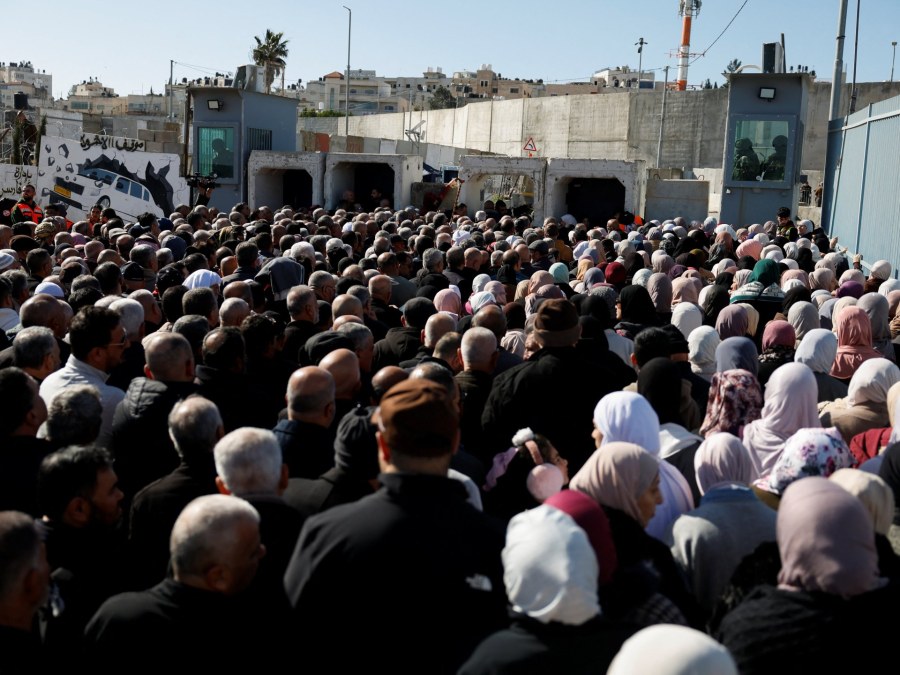
Every Palestinian born in the West Bank before the start of the occupation in 1967 has witnessed the extent to which Israel has transformed the landscape through spatial planning, military closures, and settlement, infrastructure and road construction. Sixty years on, what used to be a straightforward journey from point A to point B within the West Bank has become an arduous and frequently hazardous undertaking.
As a foreigner living in the West Bank in the 1980s and visiting it off and on ever since, this transformation revealed itself in incremental leaps and bounds, on each occasion provoking a shock of recognition mixed with consternation at how things looked the same but different.
I remember driving from Jerusalem to Ramallah in the 1980s, for example. The two cities were linked by a single highway with an Israeli army checkpoint at Qalandia refugee camp. To get to my destination would take me from 20 minutes to half an hour, at most, depending on traffic and the mood of the soldiers that day.
Fast forward to 2000. I had not visited for several years on the day I took my rental car along the old road out of Jerusalem. Ten minutes into my journey and not having taken any turns, I suddenly found myself inside an Israeli settlement, a suburb of occupied East Jerusalem.
Backtracking, I discovered that the way to Ramallah now required leaving the main highway for a lesser road. I proceeded. Yet before another 10 minutes had passed, I ended up at the entrance to another Israeli settlement, this time in the occupied West Bank, having again missed the relevant exit.
Looking back at those days, I now remember such unexpected forced deviations as annoyances that barely consumed additional time. Today, by contrast, travelling from Jerusalem to Ramallah can take an hour, or hours, as the army slows down or holds up traffic at all the available access points to Ramallah at will.
For Palestinians, the experience is 10 times worse. Ever growing in number and impact, Israeli restrictions on Palestinian movement have come in various types. One class includes army checkpoints, both stationary and mobile, on West Bank arteries, makeshift earthen embankments blocking roads to villages and refugee camps, and steel gates that the army can close and open via remote control.
A second category involves access to occupied East Jerusalem and Israel, which is possible only by obtaining a permit from the military authorities. This affects Palestinians wishing to visit Islam’s and Christianity’s holy sites as well as those employed inside Israel.