Small-scale projects offer hope for Gaza farmers rebuilding lives
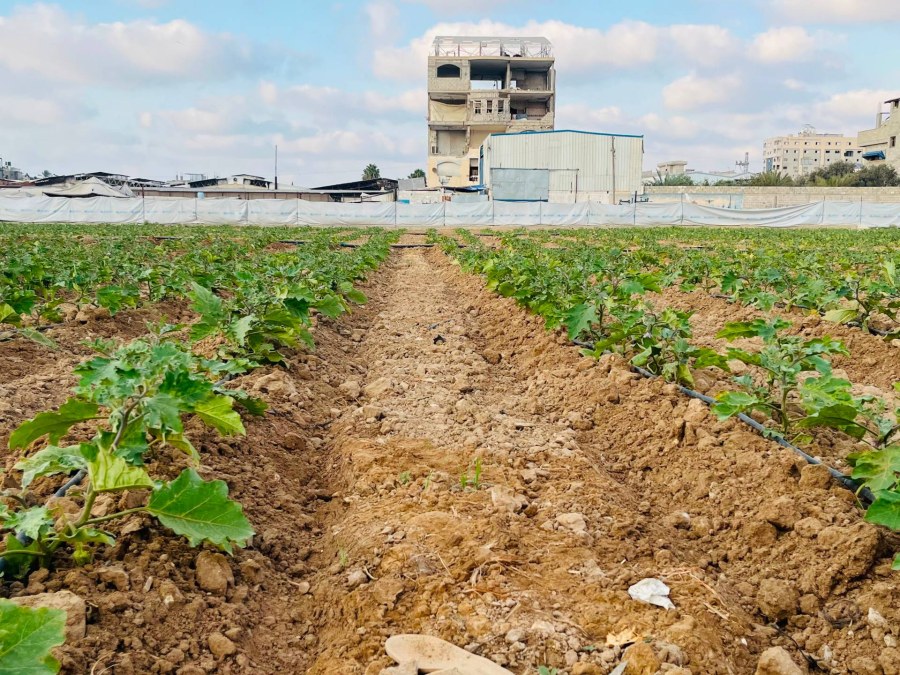
The small plot he is tending is an attempt to reclaim his old profession as a farmer with his father, Marwan, on their land in northern Gaza’s Jabalia. Al-Halabi once owned a much bigger plot of farmland – around 40,000 square metres (about 10 acres) – in northern Gaza, where he grew strawberries, tomatoes, flowers, potatoes, and eggplants. His four children – Mahmoud, 30, Reham, 27, Issa, 24, and Omar, 20 – also worked with him and relied on farming as a source of income for the family. “I have been working in agriculture since I was a child,” al-Halabi said. “The land is my life, and I have spent my whole life farming it.”
Al-Halabi says his entire farmland was bulldozed in February 2024 by Israeli forces, as part of their general destruction of Jabalia. Al-Halabi’s land there is now covered with rubble and remnants of war, including what he described as remnants of missiles and other weapons. He believes it will require extensive rehabilitation work before it can be farmed again.
So, for now, al-Halabi’s focus is on his small plot in Nuseirat, which he began renting at the start of the war, after his displacement. He began growing whatever he could obtain. “Agriculture is my profession,” al-Halabi said. “Even after being displaced, I couldn’t leave it. I found a small piece of land and planted whatever I could get.”
The plot produces only a few kilogrammes of each crop he grows, barely enough for his family, and is too small to generate enough produce for sale. “When I see the plant growing and producing a fruit, I feel that I can still farm,” al-Halabi said. “The land is small, but it has potential, and hopefully it will produce a crop.”
Data from Gaza’s Government Media Office illustrates the scale of the damage to the agricultural sector. More than 87 percent of Gaza’s agricultural land has been destroyed. About 8,700 agricultural wells have also been destroyed and put out of service, while 7,748 cattle.