How the US far-right weaponised ‘inshallah’ against Abdul El-Sayed
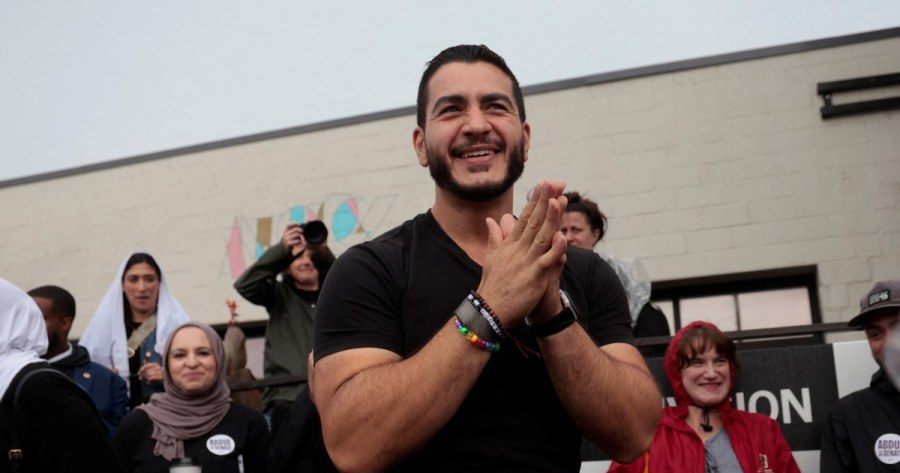
It found that the apparently orchestrated campaign against El-Sayed, whose election win is seen as a setback for pro-Israel lobbying groups such as AIPAC, has sought to reframe his electoral win as a religious and ideological threat to the US. The attacks began with accounts clipping the phrase “inshallah”, which means “God willing”, from El-Sayed’s election night speech. This word was used in the context that he hoped his election win would prove that money alone does not decide elections in the US. The phrase was stripped of its ordinary context – as a common expression of hope by Arabic speakers – and was instead presented as evidence of a sinister political and religious takeover of the country.
Right-wing influencer Benny Johnson led the trend, posting a clip that gathered more than 193,000 views with the caption: “Muslim Socialist Candidate for Senate in Michigan Abdul El-Sayed says ‘inshallah’ during his speech on election night.” Similarly, the account ALX framed the speech as a suspicious act in a post that drew more than 80,000 views. Accounts also used terms such as “socialist Muslim candidate” while far-right figure Laura Loomer described the clip as “disgusting”. Before the final results of Tuesday’s primary were even in, one account claimed an “Islamic communist takeover of the left is coming”.
Al Jazeera’s investigation mapped a network of 1,966 accounts and more than 2,500 connections in the first 24 hours alone. The analysis showed the spread of anti-El-Sayed tweets relied heavily on reshares of posts rather than direct discussion. Al Jazeera recorded 1,847 reposts, 1,157 quotes and 1,536 mentions. A network analysis of the campaign’s first 24 hours by the Open Source Unit maps 1,966 X accounts and more than 2,500 interactions. The graphic illustrates how the spread of information was not organic but centralised around a few key influencers who established the initial narratives before secondary accounts amplified them.