What the CJP protests reveal about India’s next generation
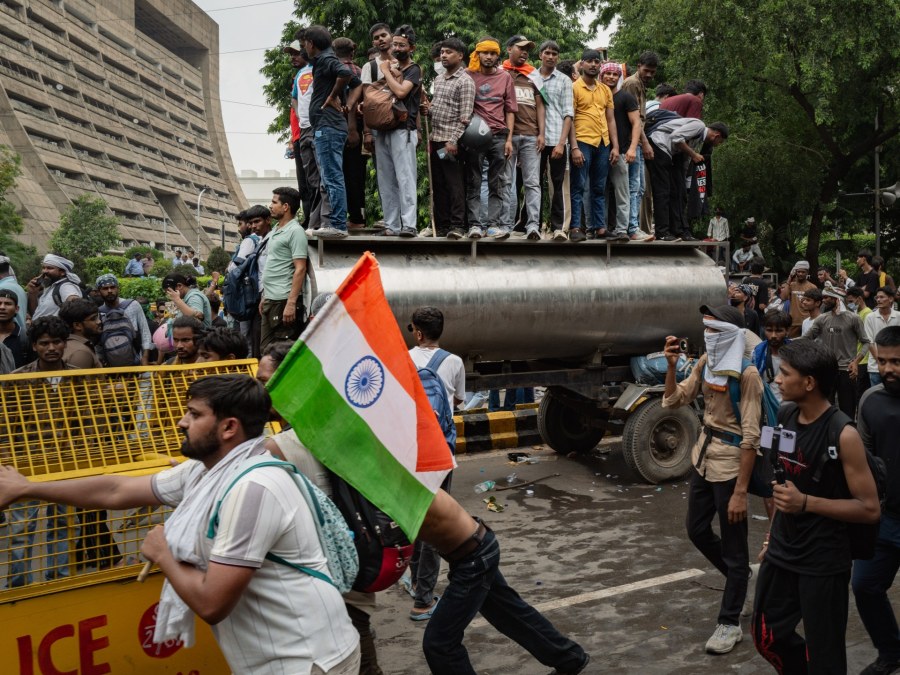
Thousands of young Indians gathered on the streets of Delhi carrying placards demanding accountability, transparency, and justice. To many observers, the protests were simply another chapter in India’s familiar contest between the government and the opposition. That interpretation, however, misses the larger story.
The Cockroach Janta Party (CJP) protests were not merely about one organization or one controversy. They revealed a profound shift in how India’s youngest generation understands politics, institutions, and the social contract itself. Around the world, governments are discovering that Generation Z is reshaping democratic politics in ways few had anticipated. From Hong Kong to Santiago, Paris to Dhaka, youth-led movements have become less ideological, more digitally connected and increasingly driven by questions of fairness, accountability, and opportunity. Delhi was not an exception; it was the Indian expression of a much larger global phenomenon. Yet reducing the CJP protests to a global trend would also miss something uniquely Indian.
At the heart of the demonstrations lay a deep personal anxiety that resonates across millions of households: The fear that merit itself may no longer be enough. The National Eligibility-cum-Entrance Test (NEET), India’s nationwide entrance test for undergraduate medical courses, was never just about a single examination. It touched something far more fundamental: The belief that education remains the surest path to opportunity. Across the country, parents invest years of savings, students sacrifice their adolescence, and entire households organize their lives around the hope that hard work will be rewarded fairly.
When allegations of a question paper leak surfaced, the outrage was therefore not confined to those who had sat the examination. It resonated with every family that saw merit as the foundation of aspiration. In that sense, NEET was less the cause of the protests than the catalyst that brought a deeper anxiety into public view. The demonstrations reflected a growing fear that institutions entrusted with safeguarding merit must not only be fair but also be seen to be fair. Once public confidence in that principle begins to weaken, the consequences extend far beyond a single examination or a single cohort of students.
History suggests that movements born out of genuine public concern are rare.